


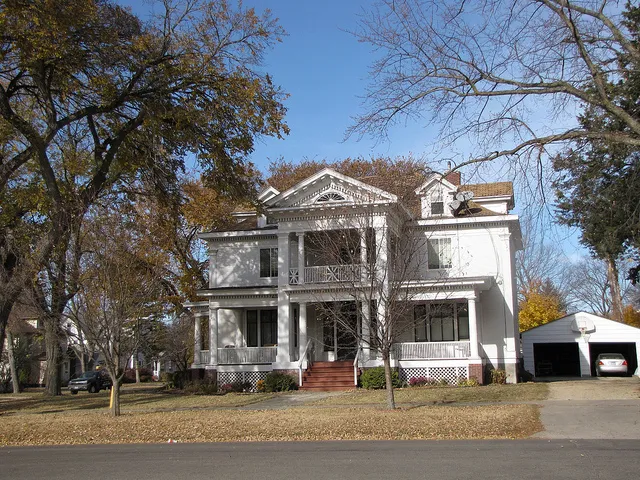
Neighborhood Overview
The Central Residential Historic District is an established residential area in Brookings, South Dakota, known for its historic homes, mature trees, traditional street layout, and proximity to downtown. The neighborhood reflects an important period in Brookings' development, when the city was growing into a regional center for education, commerce, and community life. Unlike newer subdivisions with more uniform housing designs, this district features a mixture of architectural styles, home sizes, and building types. Older houses, front porches, detached garages, and tree-lined sidewalks contribute to its distinctive appearance.
For people considering a move to Brookings, the district offers an opportunity to live in a historic residential setting close to downtown businesses, cultural attractions, and public services. Its location is convenient for exploring central Brookings, although a vehicle remains useful for many everyday errands and activities elsewhere in the city.
Location and Boundaries
The Central Residential Historic District is located immediately east of downtown Brookings. According to the National Register of Historic Places, the district is roughly bounded by:
North: Sixth Street.
South: Third Street, along portions of the district.
West: Fifth Avenue.
East: Medary Avenue.
These are general geographic references rather than continuous rectangular boundaries. The designated district follows an irregular outline, and not every property within these streets is necessarily included. Its central location places downtown businesses to the west and additional residential neighborhoods to the east and south. South Dakota State University is located farther north and east, making it another important destination in the surrounding city. Before purchasing or renovating a property, residents should check the official historic district map to confirm whether the individual parcel falls within the designated area.
History and Architectural Character
The Brookings Central Residential Historic District was added to the National Register of Historic Places in 1994. Its boundaries were expanded in 2001. The City's historic preservation materials identify 127 primary structures and 93 secondary structures associated with the district's historic development, primarily between 1891 and 1941. These figures describe the historic inventory rather than a current count of occupied or available homes. The district contains a variety of architectural influences, including:
Queen Anne: Often recognized by asymmetrical facades, decorative detailing, prominent porches, and varied rooflines.
Colonial Revival: Generally associated with balanced proportions and traditional architectural details.
Classical Revival: Featuring design elements inspired by classical architecture.
Craftsman and Bungalow: Commonly characterized by practical floor plans, front porches, and simpler decorative details.
Vernacular architecture: Traditional buildings shaped by local construction practices and everyday housing needs.
Not every property represents a distinct architectural style. Many homes combine influences or follow simpler designs that were common when they were built. Several historically significant buildings also contribute to the district's character, including the 1921 Building, formerly used as a school, and historic church properties. The former Carnegie Library building, now occupied by the Brookings Arts Council, is another nearby example of the city's architectural heritage.
Mature trees are an especially noticeable feature of this part of Brookings. The city's historic residential district is also featured in local urban arboretum and walking-tour materials. Together, these characteristics provide a visible connection to the city's earlier residential development.
Housing and Residential Environment
Housing in the Central Residential Historic District differs significantly from the newer residential developments found elsewhere in Brookings. Single-family homes are an important part of the neighborhood, although the historic district also includes multifamily buildings and other property types. Homes vary in floor plans, square footage, number of bedrooms, renovation history, and available parking. Some retain original architectural features, while others have been modified or modernized.
For potential buyers, a thorough property inspection is particularly important. Areas worth reviewing include foundations and basements, roofing, electrical systems, plumbing, windows, insulation, heating equipment, and signs of moisture intrusion. These considerations do not mean that older homes are necessarily in poor condition. Maintenance and renovation history vary from property to property. Buyers should also verify whether past additions or alterations were properly permitted.
Historic Preservation and Renovation Rules
Owning property in a designated historic district can involve additional planning considerations. In Brookings, exterior work that requires a permit may also require a historic preservation review under South Dakota's 11.1 Review process. Depending on the proposed work, this can affect additions, exterior alterations, demolition, or new construction. The review process does not automatically prohibit renovations. Its purpose is to consider how qualifying projects may affect historic properties and their architectural character.
Owners should contact the City of Brookings before beginning significant work and confirm the requirements for their specific property. For renters, it is worth checking heating expenses, maintenance responsibilities, parking arrangements, and the property's condition. Brookings also maintains a municipal inspection and licensing system for rental dwellings. Prospective tenants can ask whether a rental property has the required city license and whether its permitted occupancy meets their needs.
Shopping, Dining, and Everyday Services
Proximity to downtown is one of the district's most practical advantages. Main Avenue and nearby downtown streets offer a selection of restaurants, cafés, small businesses, personal services, professional offices, and community destinations. This gives residents access to local businesses without necessarily traveling to the outer commercial areas of Brookings.
Brookings Public Library
Located at 515 Third Street, Brookings Public Library provides books, digital resources, public computers, meeting spaces, and educational programming. The library also organizes activities for children, teenagers, and adults, including reading and learning opportunities. Its central location makes it a useful destination for residents who regularly use public facilities.
Brookings Arts Council
The Brookings Arts Council operates from the historic Carnegie Library building at 524 Fourth Street. The organization hosts art exhibitions, classes, workshops, and cultural programming. It is one of the local institutions that connects Brookings' historic architecture with contemporary community activities.
Brookings Farmers Market
The Brookings Farmers Market provides opportunities to purchase products from regional farmers, food producers, and other vendors. The warmer-season market operates on the 300 block of Sixth Avenue, between the library and courthouse. A separate indoor winter market is also organized, with schedules and locations subject to change.
Larger Shopping Trips
While downtown provides a variety of services, residents generally need to travel to other parts of Brookings for major supermarkets, larger retail stores, and certain specialized businesses. The convenience of individual destinations depends on the exact property location and preferred transportation method.
Schools and Education
The Central Residential Historic District is within the Brookings School District 05-1 service area. Brookings operates three public elementary schools:
Medary Elementary School: 718 Fifth Street South.
Hillcrest Elementary School: 304 15th Avenue.
Dakota Prairie Elementary School: 111 26th Street South.
These schools serve early elementary grades, including kindergarten through third grade, with preschool programming also listed by the district. Students in grades 4–5 attend Camelot Intermediate School, located at 1401 15th Street South. George S. Mickelson Middle School serves grades 6–8, and Brookings High School serves grades 9–12. Important for families: Attendance assignments are determined by residential address, not by the historic district name.
Brookings School District revised its elementary attendance boundaries beginning with the 2026–2027 school year. Families should use the school district's official attendance boundary information or contact the district before making housing decisions based on a particular school.
Child Care and Preschool Options
Brookings has a range of child care arrangements, including licensed centers, preschool programs, and family-based child care. These facilities are distributed throughout the city rather than concentrated within the historic district. Families should verify enrollment availability, operating hours, age requirements, and transportation arrangements directly with individual providers. The South Dakota Department of Social Services maintains an official provider search and inspection information that can help parents research available options.
Parks, Family Activities, and Recreation
The Central Residential Historic District is primarily a residential area, but its location provides access to several important cultural and recreational destinations in Brookings.
Children's Museum of South Dakota
Located at 521 Fourth Street, the Children's Museum of South Dakota offers hands-on exhibits and interactive learning experiences. Children can explore activities centered on creativity, discovery, imaginative play, and practical learning. The museum is a convenient destination for families exploring central Brookings and offers both indoor and outdoor experiences.
Pioneer Park
Pioneer Park is located near Sixth Street and First Avenue, west of downtown. Its facilities include playground equipment, a basketball court, sand volleyball, picnic areas, open recreational space, and a historic bandshell. The park is also known as the setting for the Brookings Summer Arts Festival.
Hillcrest Park
Hillcrest Park, located farther east along Sixth Street, offers playground equipment, athletic facilities, walking and biking paths, picnic shelters, and open space. The park is adjacent to Hillcrest Elementary School and the Hillcrest Aquatic Center. It provides additional recreational opportunities beyond the immediate historic neighborhood.
Other Community Activities
Brookings also offers recreational facilities, organized sports, university events, library programming, and seasonal community celebrations. Residents can explore these activities throughout the city, depending on their interests, schedules, and transportation needs.
Transportation and Getting Around
The Central Residential Historic District has a traditional street grid with sidewalks along many residential blocks. Its proximity to downtown makes walking practical for some destinations, especially businesses, cultural facilities, and public services in central Brookings. However, the availability and condition of sidewalks, street crossings, and accessible routes should be checked for specific trips.
Driving
Sixth Street is a major east-west route serving Brookings. It connects central areas with other parts of the city and provides access toward regional roads and Interstate 29. A personal vehicle is useful for commuting, grocery shopping outside downtown, transporting children to activities, and traveling beyond Brookings.
Public Transportation
The Brookings Area Transit Authority (BATA) provides public transportation services in Brookings and surrounding communities. BATA operates a reservation-based service rather than a conventional frequent fixed-route city bus system. Trips generally need to be arranged in advance, with reservations typically requested at least one business day before travel. The service can be used for shopping, medical appointments, work, school, and other transportation needs, depending on scheduling and service availability.
Residents who plan to rely on public transportation should confirm operating hours, fares, service areas, and booking procedures directly with BATA.
Walking and Cycling
The neighborhood's grid-style streets create connections to nearby blocks and downtown destinations. Cycling may be another option for local travel, although routes vary in traffic conditions, crossing requirements, and available cycling infrastructure. Residents should assess their intended routes rather than assume every destination is equally convenient without a car.
Climate and Seasonal Living
Brookings experiences a continental climate with cold winters, warm summers, and substantial seasonal variation. Winter weather can bring freezing temperatures, snow, ice, and strong winds. For residents of older homes, heating efficiency and insulation are especially important considerations. Prospective buyers and renters should ask about the property's heating system, window condition, insulation, and typical winter utility expenses. Another practical consideration is snow removal. Under Brookings municipal rules, property owners are generally responsible for clearing snow and ice from adjoining public sidewalks and applicable curb ramps within 48 hours after snowfall ends.
The city also issues snow alerts that can temporarily restrict on-street parking while streets are being cleared. Residents who depend on street parking should understand these requirements, especially during winter. Spring, summer, and fall provide opportunities to enjoy the neighborhood's tree-lined streets, nearby parks, and community activities.
What Should Buyers and Renters Know?
The Central Residential Historic District offers a distinctive setting, but properties should be evaluated individually. Several questions are particularly useful before making a decision. Does the property fall within the historic district? The official designation applies to a defined set of parcels. Buyers should confirm the individual address. What renovations have been completed? Older homes can vary considerably in plumbing, electrical systems, insulation, foundation condition, and previous improvements.
Are there additional renovation requirements? Some permit-related exterior projects may require historic preservation review. Which schools serve the address? Families should confirm current school assignments directly with Brookings School District. What parking is available? Check for driveways, garages, off-street spaces, and any relevant city parking restrictions. What are the winter maintenance responsibilities? Review snow removal duties, heating expenses, and practical winter access. How convenient are regular errands?
Consider travel to work, school, grocery stores, health care, and recreational activities. Is a rental properly licensed? Prospective tenants can verify rental licensing and occupancy requirements through the City's Building Services department.
Is the Central Residential Historic District a Good Place to Live?
The Central Residential Historic District offers a residential experience shaped by Brookings' architectural history and central location. Its most recognizable features include historic houses, mature trees, established streets, varied residential architecture, and proximity to downtown. The area provides access to important community amenities, including the public library, arts facilities, local businesses, and family attractions. At the same time, older properties can involve different maintenance needs than newer homes, and historic preservation requirements deserve careful attention.
The district's central location is convenient for some daily activities, but residents may still depend on a car or scheduled transportation for destinations across Brookings. For people researching a move, visiting the neighborhood, exploring downtown, reviewing the official historic district boundaries, and comparing individual properties can provide a clearer understanding of what everyday life here might look like. The Central Residential Historic District is a distinctive part of Brookings where the city's residential history remains visible in its buildings, streets, and surrounding community.
School pages for further research
These are schools mentioned in this guide, not guaranteed assignments for a neighborhood. Confirm eligibility with Brookings School District using the exact address and current school year.
Explore Brookings on StrollPlace
Browse Brookings schools and the Brookings city page. School pages describe institutions; confirm attendance eligibility with the district using the exact residential address.
Sources and further reading
Reviewed October 27, 2026. Plans and inventories are distinguished from completed facilities; use current operator and property-specific information for decisions.