Buffalo is a western New York city at the eastern end of Lake Erie, near the head of the Niagara River. Its downtown waterfront was once a transfer point between lake shipping and the Erie Canal. Inland, parkways, older residential blocks and neighborhood shopping streets spread across a city whose history reaches far beyond the harbor.
The Buffalo Creek area has a long Seneca history. Land speculation and nineteenth-century treaties forced many Seneca people from the Buffalo Creek Territory, but the Seneca Nation’s presence in Buffalo continues today. The growth of the American city took place alongside that dispossession, rather than on an unoccupied landscape.
The Erie Canal opened in 1825, linking Buffalo with the Hudson River corridor and Atlantic markets. The city incorporated in 1832 and grew as a place where lake, canal and later railway traffic met. By 1901, its prominence was on display at the Pan-American Exposition; after President William McKinley was shot there, Theodore Roosevelt took the presidential oath in a Buffalo home.
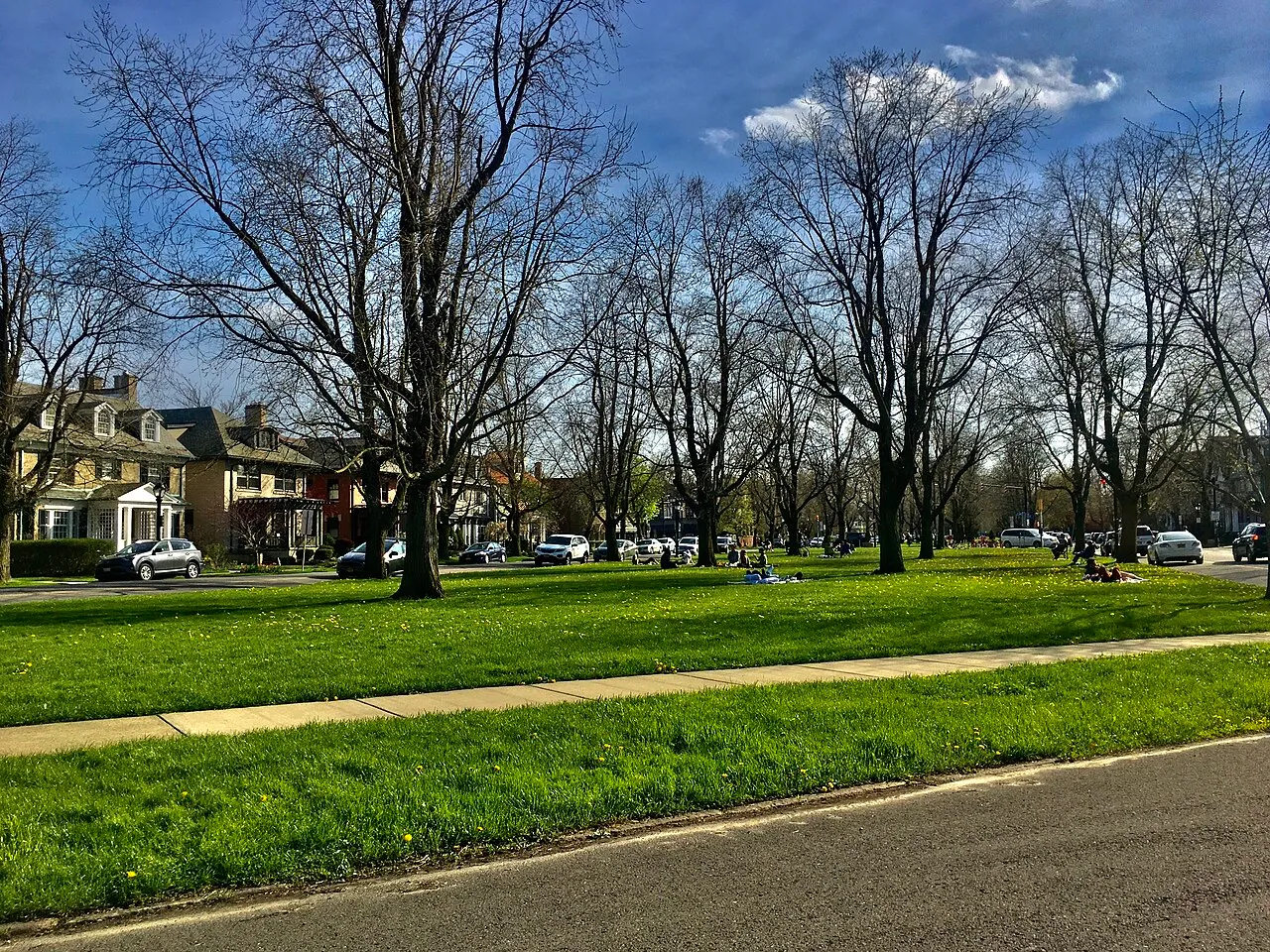
A different part of Buffalo’s identity began with Frederick Law Olmsted’s visit in 1868. Working with Calvert Vaux, he developed a system of parks serving different parts of the city. Delaware Park, Front Park and what is now Martin Luther King Jr. Park were the first three, connected to the wider urban landscape rather than gathered into a single central park.
Canalside now brings museums, events and public spaces to the former harbor area. Allentown, Elmwood Village and Hertel Avenue provide other centers for shops, food and music, while Michigan Avenue’s cultural institutions tell important parts of the city’s Black history. Buffalo’s waterfront and its neighborhood streets offer different ways to encounter the same city.