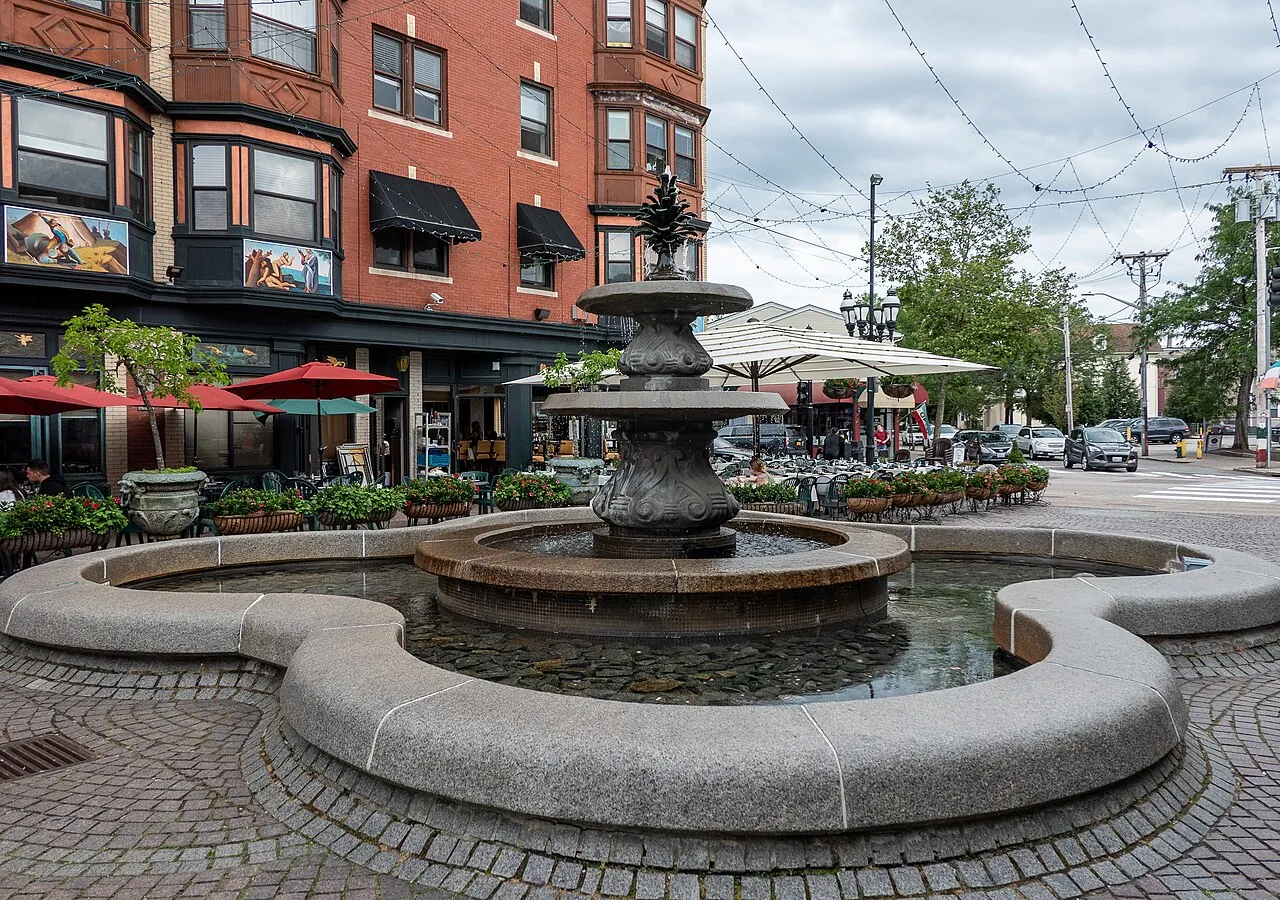
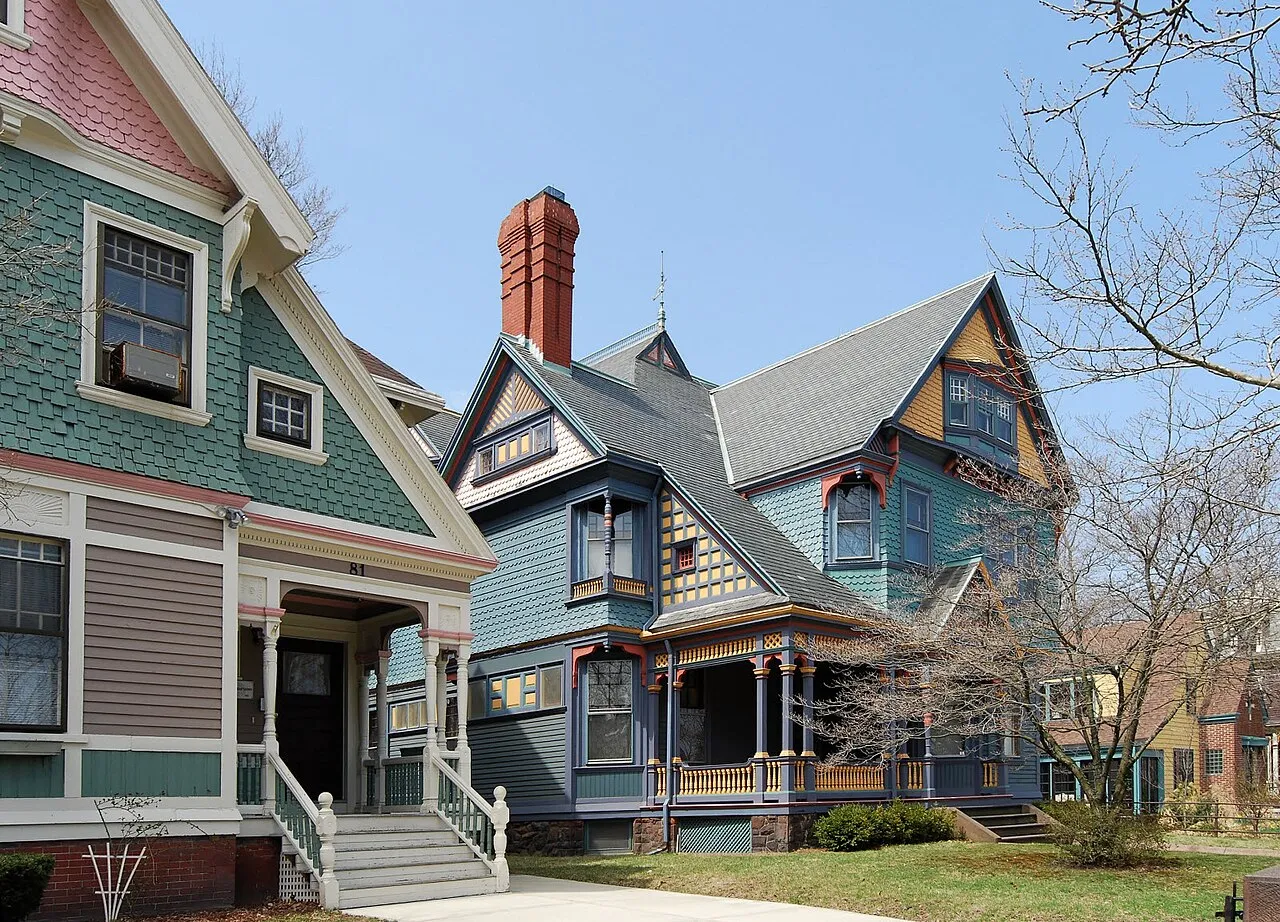
Providence, Rhode Island’s capital, has rivers, steep residential streets, and factory districts near the head of Narragansett Bay. Downtown sits below College Hill, and older neighborhoods and business streets extend west through Federal Hill and the West End. Government, higher education, and the arts have found homes in parts of the city that took shape at different times.
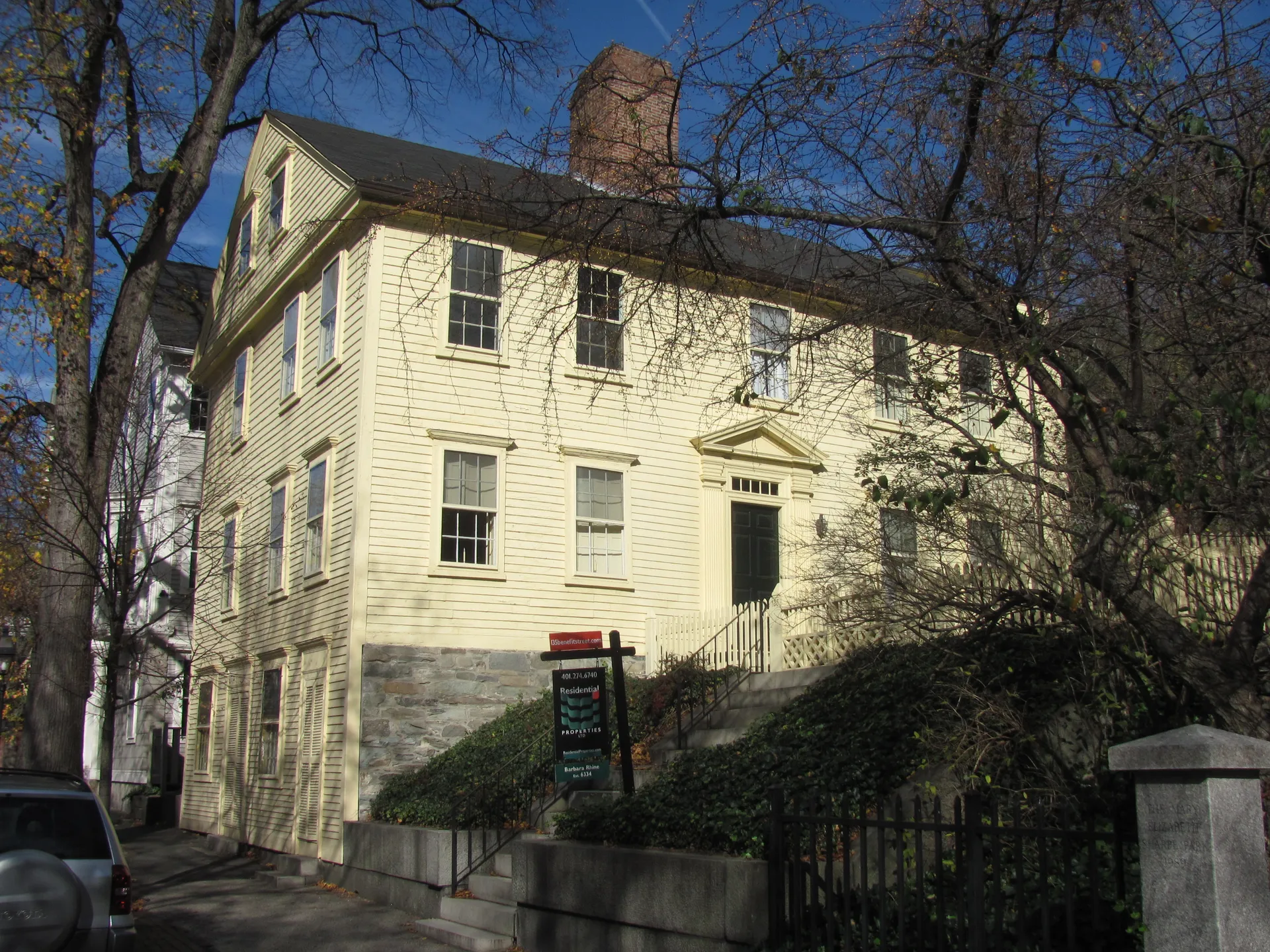
Roger Williams and a small group of followers settled Providence in 1636 after reaching an agreement with the Narragansett. Exiled for his religious views, Williams helped establish a community without an officially authorized church. Early house lots lined the settlement’s streets, and people worshipped outdoors and in their homes.
Manufacturing later changed the city’s skyline and the size of its buildings. In the nineteenth and early twentieth centuries, factories making jewelry and related goods clustered in the Jewelry District. Taller brick buildings fit more workspace into the district, and large windows brought in daylight for production. Many of the surviving factories now house offices, studios, and homes, and their industrial past is still visible in the buildings.
College Hill grew around its schools. Brown chose Providence as its permanent home in 1770. In 1877, the women who founded the Rhode Island School of Design put surplus funds from the state’s Centennial Exhibition effort toward an art and design school and museum.
The riverfront took on its present shape more recently. Construction on Waterplace Park began in 1988, and the park was dedicated in 1994. Its paths, amphitheater, and public spaces facing the river helped reconnect downtown to the waterways, which now also host WaterFire events.