


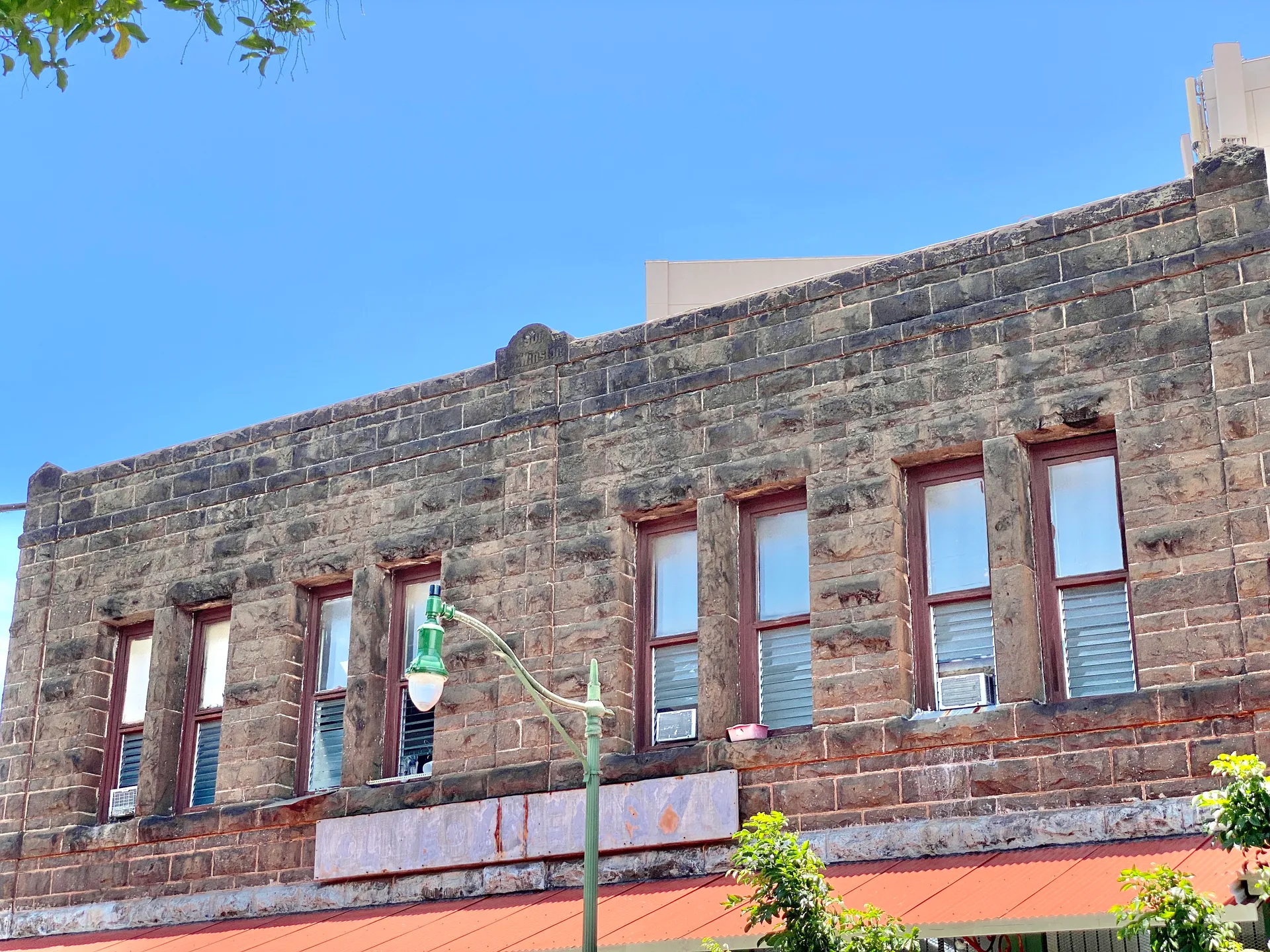
Chinatown puts a home search beside Honolulu’s Downtown business core, with market streets and evening venues nearby. Kaimukī combines a Waiʻalae Avenue shopping corridor with residential hills. For someone moving to Honolulu, the choice is less about which landmark is nearby than where the home sits relative to work, a grocery shop and any uphill return.
The researched Chinatown profile and Kaimukī profile give more detail on each area. This guide connects those details into a weekly routine, using sources checked October 18, 2026.
Housing: the historic core, adjoining towers or hillside streets
Chinatown’s older commercial and residential blocks are distinct from the adjoining Kukui district’s condominium buildings. Kukui Plaza is a mixed-use example nearby, with its management office at 1255 Nuʻuanu Avenue. Its association describes 908 condominium apartments, commercial space and a park for residents. A home there belongs to a managed residential complex outside Chinatown’s historic core.
In Kaimukī, the University of Hawaiʻi community report describes older houses alongside larger modern homes in hilly terrain. Waiʻalae Avenue contains the small business district; residential streets extend away from it onto slopes. A home close to shops on a map can still have an uphill return from them. The Ocean View Drive image below shows that street setting in June 2021.
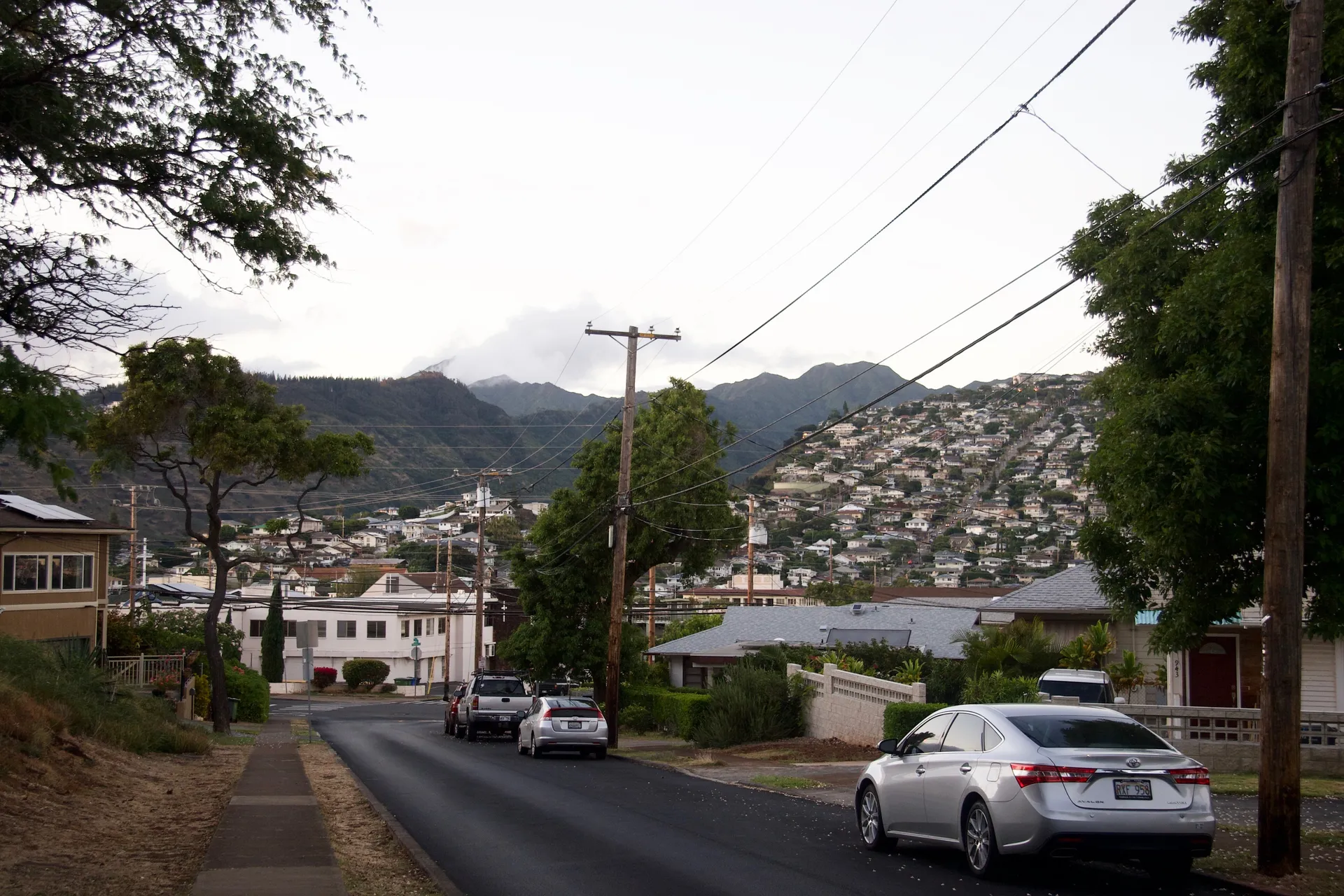
Photo: Achaikon / Wikimedia Commons. CC BY-SA 4.0. Resized and converted to WebP; display layouts may crop the image.
Groceries: market hours and the late return home
Chinatown’s Oʻahu Market occupies the North King/Kekaulike corner; Maunakea Marketplace is another daytime food-shopping destination. These streets provide produce, seafood, other ingredients and small food businesses. For a late supermarket trip beyond the historic blocks, Safeway at 1360 Pali Highway posts daily hours of 5 a.m.–1 a.m.
In Kaimukī, TIMES at 3221 Waiʻalae Avenue posts regular hours of 6 a.m.–11 p.m. It also lists HOLO cards, postage stamps and water refill, so several errands can share one stop. For a Saturday produce outing, the KCC Farmers’ Market runs 7:30–11 a.m. in Parking Lot B at Kapiʻolani Community College, 4303 Diamond Head Road. It is a separate campus destination, not a substitute for an evening grocery stop.
Downtown by bus: Hotel Street is not the 1L boarding street
TheBus Routes 1 and 1L connect the Downtown area with Waiʻalae Avenue in Kaimukī. Route 1 uses Hotel Street Downtown. Limited-stop Route 1L runs along King Street eastbound and Beretania Street westbound. The operator’s map marks 1L stops at Waiʻalae/Koko Head in both directions.
For a Downtown job, Chinatown starts the journey on the Downtown side of that corridor, while Kaimukī adds the bus ride and the approach from the residential street. The return trip can begin on a different street from the outward trip. The timetable effective May 31, 2026 has separate weekday, Saturday and Sunday tables.
An adult HOLO two-hour pass costs $3 and includes transfers on TheBus and Skyline within that window. The adult daily cap is $7.50 and the monthly cap is $90. Cash on TheBus costs $3.25 at each boarding, without transfers. For two adult cash boardings, the fare total is $6.50; two separate $3 HOLO travel windows total $6, before any applicable cap. Fares were checked October 18, 2026.
A Sunday library visit or an evening on Bethel Street
Kaimukī’s public library at 1041 Koko Head Avenue has regular Sunday hours of 9 a.m.–4 p.m., closes Saturday, and stays open until 7 p.m. on Monday and Tuesday. That makes a Sunday visit or an early-week evening useful options for borrowing, public computers or Wi-Fi. State-holiday closures are listed separately.
In Chinatown, Hawaii Theatre at 1130 Bethel Street supplies a different outing: concerts, stage productions and film, with dates and tickets on its current calendar. Restaurants, bars and clubs also occupy the older district. An evening near Bethel or Nuʻuanu reveals a different routine from the daytime markets, which matters when considering a home close to those streets.
Outdoor space: resident access and shared community courts
Kukui Plaza’s park is for residents of the complex. It should not be treated as a public park available to every Chinatown address. In Kaimukī, the city court directory lists four pickleball courts with lights at Kaimuki Community Park, marked on volleyball space. The shared layout means a regular pickleball game has to account for another sport using the same surface.
A first visit that follows the routine you would keep
For Chinatown, begin with the Kekaulike/North King market corner, then locate the Hotel Street stops and the separate King/Beretania stops that match your work trip. If the home search extends into Kukui’s towers, continue to the building’s actual entrance rather than ending the visit at a market or theatre.
For Kaimukī, use Waiʻalae/Koko Head as a corridor reference, then walk the approach to the residential street under consideration. Include the return from TIMES with a shopping bag, or the library on the day you would use it.