


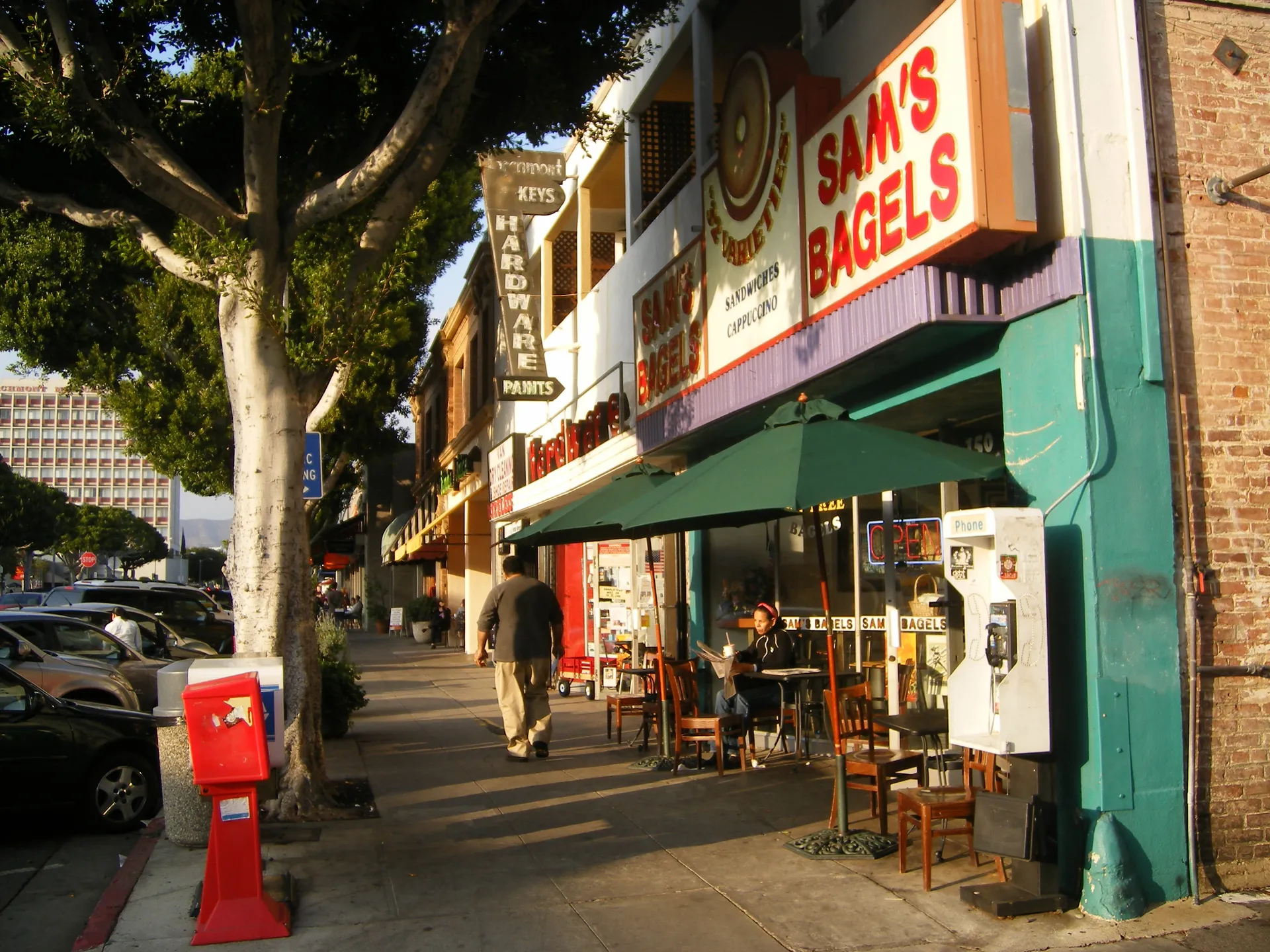
Larchmont is a centrally located Los Angeles neighborhood known for its established residential streets, historic homes, apartment buildings, and convenient access to nearby shops, restaurants, and everyday services. While Los Angeles is often associated with busy roads and car-dependent living, parts of Larchmont offer a more neighborhood-focused experience. Tree-lined residential streets sit close to local businesses, and the popular Larchmont Village shopping district provides a compact destination for dining, shopping, and community activities. But living in Larchmont is not the same as living directly beside Larchmont Village's commercial center.
Housing options, walkability, school assignments, transportation access, and daily convenience can vary significantly depending on the exact property. This guide explores what everyday life in Larchmont can look like, including housing, schools, parks, transportation, shopping, safety considerations, and the details worth investigating before choosing a place to live. Where Is Larchmont in Los Angeles? Larchmont is located in central Los Angeles, near Hollywood, Hancock Park, Windsor Square, and Koreatown. The Larchmont Village Neighborhood Association identifies its residential area as extending approximately between:
North: Melrose Avenue
South: Beverly Boulevard
West: Arden Boulevard
East: Wilton Place
However, neighborhood boundaries can vary depending on the organization, mapping service, or real estate platform. Some maps use a broader eastern boundary, and property listings may apply the name Larchmont to nearby residential streets. This is an important detail for people researching neighborhoods before a move. A neighborhood name provides a useful starting point, but it does not automatically tell you which schools, shops, parks, or transportation services are available near a particular home. Larchmont vs. Larchmont Village: What's the Difference?
The names Larchmont and Larchmont Village are closely related and sometimes used interchangeably. Larchmont commonly refers to the broader residential neighborhood north of Beverly Boulevard. Larchmont Village is also a name used by the local residential community, but it is especially well known for the shopping and dining district along Larchmont Boulevard, between Beverly Boulevard and 1st Street. The commercial district lies immediately south of the residential neighborhood commonly mapped as Larchmont, within the surrounding Windsor Square area. That distinction matters.
A home advertised as being in Larchmont might be a short walk from the Village's shops and cafés, while another property with the same neighborhood label could be much farther away. For anyone planning a move, understanding the exact location is more useful than relying on the neighborhood name alone. What Does Living in Larchmont Feel Like? Larchmont has a residential character shaped by a mixture of architectural styles, building types, and established city streets.
Some blocks feature detached homes with mature trees and landscaped front yards. Others include apartment buildings, smaller multifamily properties, and residential streets closer to commercial activity. This creates different living environments within a relatively small part of Los Angeles. Someone living on a quieter side street may experience a different daily atmosphere from someone whose apartment faces Melrose Avenue or another busy corridor. One of Larchmont's distinguishing features is the proximity of residential streets to neighborhood-serving businesses.
For people living close to Larchmont Boulevard, certain everyday activities may be possible without driving. At the same time, Larchmont remains part of a large metropolitan area where commuting patterns, traffic, and access to services can differ considerably between addresses. What makes the neighborhood distinctive? Several characteristics shape everyday life in Larchmont:
Established residential streets with mature trees.
A mixture of historic homes and apartment buildings.
Access to nearby cafés, restaurants, and shops.
Proximity to Larchmont Village's pedestrian-oriented commercial district.
A central location within Los Angeles.
Different housing options and levels of walkability depending on the street.
These characteristics make Larchmont worth exploring, but they should not be interpreted as guarantees about every property in the neighborhood.
Larchmont Village: Shopping, Restaurants & Local Life
One of the area's best-known destinations is Larchmont Village, the commercial stretch of Larchmont Boulevard between Beverly Boulevard and 1st Street. Unlike large shopping developments surrounded by expansive parking lots, many businesses along this street face directly onto the sidewalk. The result is a compact shopping and dining environment where visitors can move between different destinations on foot. The commercial district includes a changing selection of:
Coffee shops and cafés.
Restaurants and casual dining.
Specialty food stores.
Boutiques and local retailers.
Personal services.
Fitness and wellness businesses.
Other neighborhood-serving establishments.
The exact businesses may change, but the commercial district's pedestrian-oriented layout remains an important part of its identity. Why does this matter for residents? For someone living nearby, having several destinations concentrated along one street can make everyday routines more convenient. A resident might walk to a café, pick up a few groceries, visit a local shop, and return home without needing to drive between every stop. However, that convenience depends on the property's location.
A home near Beverly Boulevard and Larchmont Boulevard may provide relatively direct access to the shopping district. A property farther north or east may involve a significantly longer walk. When researching Larchmont, consider the actual distance from the home to the services you expect to use regularly.
Larchmont Village Farmers Market
The Larchmont Village Farmers Market is an established community destination along Larchmont Boulevard. Location: 209 N. Larchmont Boulevard, Los Angeles, CA 90004 The market takes place in the municipal parking lot near the commercial district, bringing together vendors selling fresh produce, prepared foods, and other products. It provides residents with an opportunity to shop locally and participate in a regular neighborhood activity. For people living nearby, the market may become part of their weekly routine. However, market activity also affects the surrounding area.
Visitor traffic, pedestrian activity, and parking availability can change during market hours. If you are considering a property close to the Village, it is worth visiting on both a market day and an ordinary weekday. This can provide a more realistic understanding of the neighborhood's daily rhythm. Check the Larchmont Village Farmers Market for current operating days, hours, and other information. Walkability: Can You Live in Larchmont Without a Car? Walkability is one of the most appealing characteristics of the Larchmont Village commercial area.
Its shops, restaurants, and services are concentrated along a relatively short stretch of Larchmont Boulevard. Some nearby residential streets also provide pleasant walking environments, particularly where mature trees, sidewalks, and lower residential traffic contribute to the streetscape. But it is important to distinguish between two things: A neighborhood that is enjoyable to walk through and a neighborhood where everyday necessities are within walking distance. These are not always the same.
A property may be surrounded by attractive residential streets but still require a car for groceries, healthcare, school transportation, or other regular errands. What should you check? Before choosing a home, identify the destinations you expect to visit most often:
Grocery stores.
Pharmacies.
Coffee shops and restaurants.
Schools and childcare.
Healthcare providers.
Parks and playgrounds.
Libraries.
Fitness facilities.
Public transportation stops.
Then check the actual walking routes. Distance alone is not enough. Consider major street crossings, sidewalk conditions, lighting, traffic, and the convenience of traveling with children or carrying groceries. For someone living close to Larchmont Village, several everyday activities may fit into a walkable routine. A home farther away may create a different lifestyle, even if both properties are advertised as being in Larchmont. The strongest pedestrian convenience is generally concentrated near Larchmont Boulevard's commercial district rather than distributed evenly throughout the broader neighborhood.
Public Transportation in Larchmont
Larchmont has access to public bus transportation along surrounding streets, but it does not have a Metro rail station directly within the residential neighborhood. For residents who prefer not to drive, this makes the exact location of bus stops and nearby rail connections particularly important.
Metro bus connections
Major streets around Larchmont form part of Los Angeles's bus transportation network. Beverly Boulevard, Melrose Avenue, and West 3rd Street provide connections to other parts of the city. Depending on the property, residents may be able to reach bus stops along these corridors on foot. However, bus service differs by route, direction, operating hours, and frequency. A bus stop near a home does not necessarily mean there is a convenient direct connection to work, school, or other regular destinations.
Before relying on public transportation, review the current routes and schedules through LA Metro.
LADOT DASH services
LADOT operates neighborhood-oriented transportation services in different parts of Los Angeles. Some services in the broader Hollywood and Wilshire area may provide additional connections near Larchmont. Availability and usefulness depend on the current route network and operating schedule. Check LADOT Transit for current information rather than assuming that every nearby shuttle or DASH service operates throughout the day.
Metro D Line
The Metro D Line provides rail connections through central Los Angeles and the Wilshire corridor. However, there is no D Line station directly in Larchmont. Residents who want to use the subway need to consider the journey between their property and the nearest practical station. Depending on the address, this may involve walking, taking a bus, cycling, or another form of transportation. For someone planning to commute by rail, the important calculation is the complete journey: Home → station access → train journey → final destination
A station that looks relatively close on a city map may still require a substantial first-mile connection. Is a car necessary in Larchmont? A car may be less necessary for certain short trips if a home is located close to shops, restaurants, and other everyday services. However, many residents may still find driving useful for commuting, major shopping trips, appointments, and travel across Los Angeles. Whether living without a car is practical depends on the specific property, work location, transportation options, and personal routine.
Driving, Commuting & Parking
Larchmont's central location provides access to neighborhoods such as Hollywood, Koreatown, Hancock Park, and Mid-Wilshire. However, central location does not eliminate traffic. Travel times can vary significantly depending on the destination, route, and time of day. A location that appears convenient on a map may involve a longer commute during weekday traffic. If commuting is important, compare realistic travel times rather than relying on distance alone.
Parking considerations
Parking arrangements differ across Larchmont's housing stock. Detached homes may have private driveways or garages. Apartment buildings may offer assigned parking, tandem spaces, shared garages, or limited off-street parking. Street parking restrictions can also vary. Before renting or purchasing a home, verify:
Whether parking is included.
The number of available spaces.
Whether spaces are assigned or shared.
Whether guest parking is provided.
Street restrictions and permit requirements.
EV charging availability, if relevant.
Parking near Larchmont Village
The commercial district has metered street parking and municipal parking facilities. Municipal Parking Lot 694, located at 209 N. Larchmont Boulevard, is also used for the farmers market. Parking availability can therefore change during market operations. This is a useful consideration for anyone planning to live immediately beside the commercial district.
Parks, Playgrounds & Outdoor Recreation
Larchmont provides access to neighborhood green spaces and recreation facilities in surrounding areas. However, it is not centered around a large public park or major recreation complex. Residents interested in outdoor activities may use smaller nearby parks for everyday outings and travel to larger facilities for sports or organized recreation.
Robert L. Burns Park
Address: 4900 Beverly Boulevard, Los Angeles, CA 90004 Robert L. Burns Park is a small neighborhood park near Beverly Boulevard in the surrounding Windsor Square area. The park includes landscaped space, walking paths, a children's play area, and picnic facilities. It offers a local outdoor option, although its size and amenities are more limited than those of larger city parks. Its practical convenience depends on how far a resident lives from the park and the walking route involved.
Pan Pacific Park
Address: 7600 Beverly Boulevard, Los Angeles, CA 90036 Pan Pacific Park is a larger recreation destination west of Larchmont. Its facilities include sports fields, basketball courts, children's play areas, picnic facilities, and jogging paths. The recreation center also provides opportunities for organized sports, fitness, and community programming. For households interested in activities such as basketball, soccer, dance, or other recreation programs, it may be a useful resource. However, Pan Pacific Park is not located within the residential Larchmont neighborhood.
Residents should evaluate the actual travel distance before treating it as an everyday neighborhood amenity. What should families consider? For households with children, park access can influence everyday routines. A playground within a short walk may be useful for frequent outings, while organized sports may require travel to facilities farther away. Before moving, consider:
Distance to the nearest playground.
Sidewalks and crossings along the route.
Availability of sports facilities.
Recreation programs appropriate for children's ages.
Transportation and parking.
Registration and participation requirements.
Check Los Angeles Recreation and Parks for current facilities and program information.
Libraries & Community Resources
Public libraries can be useful for families, students, remote workers, and residents looking for educational or community activities. While there is no Los Angeles Public Library branch on the central Larchmont Village commercial strip, several branches serve the surrounding area.
John C. Fremont Branch Library
Address: 6121 Melrose Avenue, Los Angeles, CA 90038 Located along Melrose Avenue, this library may be convenient for residents near the northern side of Larchmont. Services include books and other library materials, public computers, Wi-Fi, printing, and community programming.
Wilshire Branch Library
Address: 149 N. Saint Andrews Place, Los Angeles, CA 90004 Located southeast of Larchmont, the Wilshire Branch offers public library services and educational resources. The branch provides access to computers, Wi-Fi, library collections, and community activities. For families with children, library programs and reading resources may be worth considering when comparing neighborhood amenities. However, program availability and operating hours can change. Visit the Los Angeles Public Library for current branch information.
Schools Near Larchmont: What Parents Should Know
Browse Los Angeles school pages for individual campus details. These are nearby educational resources; verify school assignment and program eligibility with LAUSD using the exact home address.
Schools are an important consideration for many households planning a move. Several Los Angeles Unified School District schools operate in the broader area surrounding Larchmont. However, a property's neighborhood name does not automatically determine its assigned public schools. School attendance boundaries can differ from the boundaries used by neighborhood associations, real estate websites, and mapping platforms. A school that appears close to a home may not be the assigned school for that address.
Third Street Elementary School
Address: 201 S. June Street, Los Angeles, CA 90004 Third Street Elementary is an LAUSD public elementary school located in the broader Hancock Park area. The school has offered specialized academic opportunities, including School for Advanced Studies and Korean Dual Language programming. Families interested in these options should verify current program availability, eligibility requirements, and enrollment procedures directly with the school.
John Burroughs Middle School
Address: 600 S. McCadden Place, Los Angeles, CA 90005 John Burroughs Middle School is another LAUSD educational resource in the surrounding area. The school has offered specialized learning opportunities such as gifted education and dual-language programs. However, admission to specialized programs may follow different requirements from ordinary residential enrollment. Families should confirm current offerings and application procedures. What about high schools? High-school assignments depend on the specific residential address.
Rather than assuming that a particular high school serves all of Larchmont, families should use official LAUSD tools to verify attendance boundaries.
How to check school assignments
Use the LAUSD Resident School Identifier to identify schools associated with a specific property. Before deciding where to live, investigate:
Assigned elementary school.
Assigned middle school.
Assigned high school.
Specialized academic programs.
Magnet and Dual Language opportunities.
Eligibility and application requirements.
Transportation options.
School schedules and extracurricular activities.
School performance information can provide useful context, but a single rating or standardized test score does not describe the entire educational experience. Families may also want to consider academic programs, student services, extracurricular activities, and the practical commute from home. Housing in Larchmont: What Types of Homes Are Available? Larchmont has a varied residential housing environment. Depending on the street, people researching the neighborhood may encounter:
Historic single-family homes.
Detached houses with private yards.
Apartment buildings.
Condominiums.
Duplexes and other multifamily properties.
Smaller rental buildings.
This variety creates different housing experiences within the broader neighborhood. Some properties offer private outdoor space and off-street parking. Others emphasize apartment living, shared amenities, or access to nearby commercial destinations.
Historic homes and neighborhood character
Established residential streets are an important part of Larchmont's identity. Architectural details, mature trees, and different building styles contribute to the area's appearance. However, older housing can also require closer attention to property condition. For buyers and renters, building age alone does not indicate quality. It is useful to examine maintenance, renovations, insulation, heating and cooling systems, parking arrangements, and other practical characteristics.
Apartment living
Apartments can provide an alternative to purchasing a detached home. However, apartment buildings vary in size, condition, amenities, parking arrangements, and management policies. A unit near a major road may offer convenient transportation access but also experience more traffic noise. A building on a quieter residential street may provide a different atmosphere while requiring longer trips for some services. Comparing individual properties is essential. How Expensive Is Housing in Larchmont? Larchmont is generally associated with a relatively expensive housing market, particularly for detached homes.
However, housing prices can vary substantially depending on the property type, size, condition, and exact location. The difference between a detached historic home and a smaller apartment or condominium can be considerable. This makes a single neighborhood-wide price an incomplete guide to what a particular household should expect to spend. What affects home prices? Several factors can influence housing costs:
Property type.
Interior square footage.
Lot size.
Building condition.
Renovations and upgrades.
Parking availability.
Outdoor space.
Exact street and location.
Proximity to shopping and transportation.
Local market conditions.
A property located close to Larchmont Village may have different characteristics and pricing from one farther away. How should buyers research prices? Start by comparing properties of similar types rather than relying only on a neighborhood median. For example, compare detached houses with other detached houses of similar size and condition. Condominiums should generally be compared with similar condominium properties. Recent sales can provide useful context, but asking prices and completed sale prices measure different things.
For current housing market information, consult Realtor.com and compare listings within the exact geographic area you are considering. Remember: different real estate platforms may use different boundaries when reporting Larchmont housing statistics. Renting in Larchmont: What Should You Expect? Rental costs in Larchmont depend on the type of unit, building condition, location, and available amenities. Apartments and smaller residential rentals may provide different options from larger detached homes. However, advertised rent is only part of the total housing expense. What should renters compare? When reviewing rental listings, consider:
Monthly base rent.
Number of bedrooms and bathrooms.
Unit size.
Included parking.
Utility responsibilities.
Laundry facilities.
Heating and air conditioning.
Pet policies and applicable charges.
Security deposits and move-in costs.
Building amenities.
Lease terms.
Applicable rent-stabilization rules.
These details can significantly affect the practical cost and convenience of living in a property. For example, an apartment with a lower advertised rent may become more expensive after adding parking, utilities, and other fees. Why do rental averages differ between websites? Real estate platforms may calculate rental statistics using different methodologies. Some focus on apartment buildings, while others include additional property types. They may also use different neighborhood boundaries, sample sizes, or reporting periods.
This means two websites can report different average or median rents without necessarily contradicting one another. For a realistic budget, compare current listings for similar properties in the same part of Larchmont. Use neighborhood statistics as background information rather than as an exact prediction of your monthly rent. Safety in Larchmont: What Should You Check? Safety is an important part of researching any neighborhood. However, describing an entire area as simply safe or unsafe can hide meaningful differences between streets and everyday situations.
Larchmont includes residential blocks, busy roads, and nearby commercial areas. Conditions may vary depending on the property location, time of day, and the routes residents regularly use.
How to evaluate the area
Before choosing a home, consider:
The immediate surrounding streets.
Pedestrian crossings and traffic conditions.
Street lighting.
Parking areas.
Walking routes to shops and transit stops.
Routes to schools and playgrounds.
Recent officially reported incidents.
For current information, consult the Los Angeles Police Department and available public safety resources. It is also useful to visit a potential property at different times. A quiet residential street during the afternoon may have different traffic patterns in the morning or evening. The goal is to evaluate the specific environment around the property rather than relying on broad neighborhood labels.
Noise, Traffic & Commercial Activity
Larchmont's location near major city corridors creates both convenience and potential trade-offs. Living close to businesses and transportation routes may reduce travel time for certain activities. However, it can also mean more vehicle traffic, deliveries, and pedestrian activity. Potential noise sources include:
Beverly Boulevard traffic.
Melrose Avenue traffic.
Commercial deliveries.
Restaurant activity.
Parking turnover.
Farmers market activity.
Nearby construction and maintenance.
Noise levels can vary considerably even between properties on the same block. Building orientation, window quality, insulation, and the location of bedrooms may influence how much street noise is noticeable indoors.
How to evaluate a property
If possible, visit during several different periods: Weekday morning → afternoon → evening → weekend Pay attention to traffic, pedestrian activity, and the sounds you can hear from inside the property. If the home is near Larchmont Village, visiting during farmers market activity can be especially informative. What Does Everyday Life in Larchmont Look Like? Larchmont's practical appeal comes from the combination of residential streets, nearby commercial destinations, and its location within central Los Angeles.
For some residents, proximity to Larchmont Village may support a routine that includes walking to coffee shops, restaurants, and local stores. For others, daily life may revolve around driving to work, taking children to school, visiting nearby parks, or using public transportation. The experience varies depending on household needs and the location of the home.
For people who enjoy walking
Properties closer to the commercial district may offer convenient access to several neighborhood businesses. However, residents should still check whether grocery shopping, healthcare, and other regular errands can realistically be completed on foot.
For families with children
School assignments, playground access, recreation programs, and travel times may be particularly important. A property near a park is not automatically within the attendance boundary of a nearby school. Each factor should be verified separately.
For commuters
The most important considerations may include driving time, parking availability, nearby bus stops, and connections to regional transportation. The convenience of Larchmont's central location depends on where someone works or travels regularly.
For renters
The balance between monthly housing costs, included amenities, neighborhood activity, and transportation expenses may be more important than the neighborhood name alone. The same neighborhood can offer very different everyday experiences depending on the exact property and household priorities.
Advantages & Trade-Offs of Living in Larchmont
Understanding both the conveniences and limitations of a neighborhood is essential before making a moving decision.
Potential advantages
Central Los Angeles location Larchmont provides access to surrounding neighborhoods and major city corridors. Established residential character Historic homes, mature trees, and a mixture of building types contribute to the neighborhood environment. Proximity to Larchmont Village Residents living near the commercial district may enjoy convenient access to cafés, restaurants, shops, and community activities. Different housing options Detached homes, apartments, and multifamily properties offer different possibilities for buyers and renters. Access to surrounding amenities Nearby parks, libraries, schools, and commercial destinations can support a variety of everyday needs.
Opportunities for walking Some properties allow residents to reach multiple destinations without driving.
Potential trade-offs
Substantial housing costs Buying or renting in Larchmont can require a significant budget, depending on the property. No Metro rail station within the neighborhood Residents who want to use rail transportation need an additional connection. Uneven walkability Not every address provides convenient pedestrian access to groceries, shops, or other necessities. Limited large-scale recreation inside the neighborhood Larger recreation facilities are located in surrounding areas. Traffic and parking considerations Residents may still depend on cars for commuting and many regional trips. Different neighborhood boundaries
Real estate platforms and community organizations may use different geographic definitions. These factors are not universal advantages or disadvantages for every household. Their importance depends on personal priorities and the specific property being considered.
What to Check Before Moving to Larchmont
If Larchmont is on your shortlist, investigate the following details before making a housing decision.
Location and neighborhood boundaries
Confirm where the property sits relative to the neighborhood map.
Measure the actual distance to Larchmont Village.
Identify nearby commercial streets and major traffic corridors.
Housing and monthly costs
Compare prices or rents for similar properties.
Check building condition and included amenities.
Calculate total monthly housing expenses.
Verify parking arrangements.
Review applicable property or rental regulations.
Transportation
Test your commute during realistic travel hours.
Check nearby bus stops and schedules.
Evaluate connections to Metro rail.
Consider how often you will need a car.
Schools and recreation
Verify school assignments using the exact address.
Research educational programs and enrollment requirements.
Measure walking or driving distances to parks.
Check recreation programs and community facilities.
Everyday convenience
Locate grocery stores and pharmacies.
Identify healthcare services.
Compare nearby restaurants and shops.
Check sidewalks and pedestrian crossings.
Consider how easy it will be to complete regular errands.
Neighborhood conditions
Review current public safety information.
Visit the property at different times.
Observe traffic and parking activity.
Evaluate noise from nearby roads or businesses.
Taking these steps can reveal practical differences between properties that initially appear similar. Is Larchmont a Good Place to Live? Larchmont is worth considering for people interested in a centrally located Los Angeles neighborhood with an established residential environment and access to nearby commercial destinations. The neighborhood's mix of historic homes, apartment buildings, and residential streets creates several types of housing experiences. Its proximity to Larchmont Village can be especially convenient for residents who value access to local cafés, restaurants, shops, and community activities.
However, that convenience depends on the property's exact location. Housing costs, parking arrangements, school assignments, transportation options, and access to recreation can vary significantly. Larchmont is not entirely car-free, and not every part of the neighborhood provides the same level of walkability. For someone considering a move, the most useful question is not simply whether Larchmont is a good neighborhood. It is whether a specific home in Larchmont supports the daily routine, budget, and priorities that matter to them.
The StrollPlace Take
Larchmont combines a central Los Angeles location, established residential streets, varied housing types, and access to the pedestrian-oriented Larchmont Village commercial district. Its strengths include nearby shops and restaurants, community amenities, and the possibility of completing some everyday activities locally. Its limitations include relatively high housing costs, no Metro rail station within the neighborhood, and differences in walkability, parking, and access to larger recreation facilities. One of the most important things to understand is that Larchmont and the Larchmont Village commercial district are not geographically identical.
A home advertised as being in Larchmont does not automatically provide the same daily convenience as a property immediately beside Larchmont Boulevard's shops and restaurants. That is why the exact address matters. At StrollPlace, we believe choosing where to live is about more than finding a home that looks right. It's about understanding everything around it.
Neighborhood boundaries, school assignments, housing costs, transportation services, businesses, and community amenities may change. Information from different sources may also reflect different geographic definitions. Always verify current conditions and the exact property address before making a housing or relocation decision.
Explore nearby neighborhoods
Compare the setting and daily connections in these Los Angeles guides:
Sources and further reading
Sources reviewed October 19, 2026. Housing figures are dated commercial estimates; school programs and enrollment should be checked with LAUSD. For current school performance reports, use the California School Dashboard.