


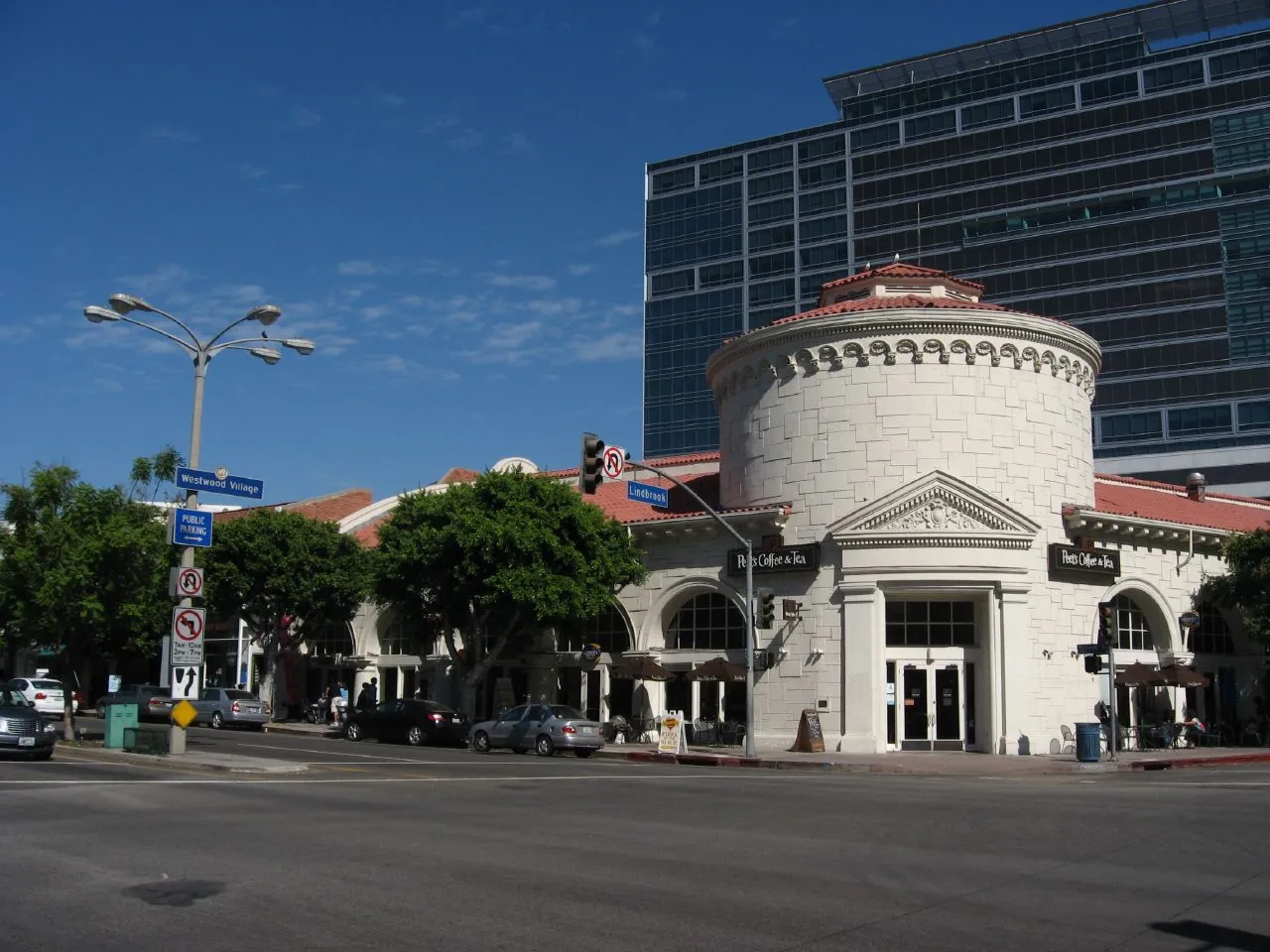
Westwood is one of the most institutionally connected neighborhoods on the Los Angeles Westside. UCLA, a major medical center, Westwood Village, public recreation, cultural institutions and an unusually extensive network of bus connections are concentrated within a relatively compact area. But Westwood is not one uniform environment. The City of Los Angeles’ Westwood Community Plan Area includes UCLA and Westwood Village, while North Westwood Village is also governed by its own Specific Plan.
Housing, street activity and everyday convenience can vary substantially across these areas — from apartments and condominiums near UCLA and the Village to high-rise housing along Wilshire Boulevard and lower-density residential streets elsewhere. That makes the exact address especially important. A home a few blocks from Westwood Village may support a very different daily routine from a condominium on Wilshire Boulevard or a residential property farther from UCLA. So instead of asking: Is Westwood a good neighborhood? A more useful question is:
Does Westwood put the services and destinations that matter to your life where you can actually use them?
What Westwood feels like day to day
Westwood combines several major activity centers. UCLA occupies a large part of the northern neighborhood. Immediately south of campus, Westwood Village concentrates restaurants, groceries, cafés, shops, entertainment and professional services. Along and around Wilshire Boulevard, the neighborhood also includes medical facilities, offices, residential towers and major transportation corridors. The result is a place where the atmosphere can change noticeably within only a few blocks. Around UCLA and Westwood Village, pedestrian and bus activity can be substantial throughout the day. Other residential streets may feel considerably quieter.
University events, medical-center traffic, construction and weekday commuting can also affect how busy different parts of Westwood feel. Westwood makes more sense when you evaluate the specific address rather than the neighborhood name alone.
UCLA: part of the neighborhood, but not all of it
UCLA is one of the defining features of Westwood’s geography and transportation network. But living near UCLA does not mean every university facility or program is automatically available to neighborhood residents. Some resources are limited to students, employees, patients or other eligible users. Others are genuinely public-facing. One example is the Mildred E. Mathias Botanical Garden, at 707 Tiverton Drive. The garden is a public-facing UCLA resource. Check the garden’s current opening hours and access notices before visiting.
For someone living nearby, this provides a publicly accessible garden and educational resource inside the UCLA campus rather than simply another university building.
Hammer Museum and public cultural resources
At Wilshire and Westwood boulevards, the Hammer Museum at UCLA is another major public resource. General admission is currently free, and individual visitors generally do not need advance reservations. The museum offers exhibitions, talks, screenings and other public cultural programming. Hours and individual events can change, so the current schedule should always be checked. UCLA also hosts additional lectures, performances, exhibitions and cultural events, although access and ticketing vary. For someone considering Westwood, this distinction matters: UCLA affects the neighborhood through more than education.
It also contributes public culture, healthcare, transportation demand and some publicly accessible open-space resources.
Healthcare: one of Westwood’s strongest distinguishing features
Healthcare access is one of the most significant characteristics of Westwood. Ronald Reagan UCLA Medical Center, at 757 Westwood Plaza, is located directly on the UCLA campus. The medical complex also includes UCLA Mattel Children’s Hospital and the Stewart and Lynda Resnick Neuropsychiatric Hospital at UCLA. Nearby, the 100, 200 and 300 UCLA Medical Plaza buildings provide extensive outpatient and specialty care. Current UCLA Health services in the area span primary care, pediatrics and numerous specialty fields.
For someone researching a place to live, the important point is not simply: “There is a hospital nearby.” It is that Westwood contains a substantial concentration of hospital, specialty and outpatient healthcare. But proximity does not guarantee:
insurance coverage;
access to a particular physician;
appointment availability;
lower medical costs.
Those need to be checked separately.
Westwood Village: shopping and everyday services
Immediately south of UCLA is Westwood Village, the neighborhood’s principal commercial core. The mix includes restaurants, cafés, grocery shopping, pharmacies, fitness businesses, personal services, entertainment and professional services. That is why the more useful question is not simply: “What businesses are in Westwood Village?” It is: How much of your normal week could actually happen here? Map the places you personally need: groceries → pharmacy → coffee → restaurants → healthcare → fitness → library → transit
For some Westwood addresses, this concentration can significantly reduce the need to drive for every small errand.
Westwood Village Farmers Market
As of October 2026, Westwood Village hosts a weekly Thursday farmers market on Broxton Avenue/Broxton Plaza. The market includes produce, prepared food and other vendors. Recurring events can change, so current operating hours should be verified before relying on them as part of your routine.
Walkability: strongest around the Village and UCLA
Westwood is another neighborhood where the word walkable needs context. Around Westwood Village, UCLA and parts of the Wilshire corridor, many destinations are concentrated relatively close together. But that does not mean every Westwood address supports the same pedestrian routine. A home near Broxton, Weyburn, Gayley or Westwood Boulevard may provide very different everyday access from a property farther into a residential area. Instead of asking: “Is Westwood walkable?” ask:
“What can I realistically reach on foot from this exact property?”
Map the actual walking routes to groceries, pharmacy, healthcare, restaurants, transit, library and recreation. Straight-line distance alone may not tell you how practical the trip really is.
Bus connections: one of Westwood’s biggest transportation strengths
Westwood does not yet have an operating Metro rail station within the neighborhood itself. That is important. But it has an unusually extensive bus network, partly because UCLA and UCLA Health generate substantial regional travel demand.
Big Blue Bus
Santa Monica’s Big Blue Bus made significant UCLA service changes in August 2026. Routes 1, 2 and 18 now use a central UCLA hub near Charles E. Young Drive and Parking Structure 2. Routes 8 and Rapid 12 provide connections between UCLA and Westwood/Rancho Park E Line Station. Route 17 connects toward Sawtelle, Palms and Culver City. A particularly useful 2026 change is that all Big Blue Bus trips serving UCLA now also serve Ronald Reagan UCLA Medical Center and UCLA Medical Plaza.
For someone living in Westwood, that makes the bus network relevant not only to university commuting but also to healthcare access and broader Westside travel.
Culver CityBus
Culver CityBus Line 6 and Rapid 6 also serve UCLA and Westwood. Current routing connects the area with Expo/Sepulveda E Line Station and continues south to the LAX/Metro Transit Center. Check the operator’s current route and airport-terminal transfer information before travelling.
LADOT commuter service
LADOT Commuter Express also offers regional services. Check the current route map, direction and weekday timetable before planning a commute. Other regional services also connect the UCLA/Westwood area with more distant parts of Southern California. But a long route list is less useful than one route that actually fits your schedule. The practical test is: home → work → healthcare → groceries → activities → home using real weekday schedules.
Metro D Line: major future access, but not operating in Westwood yet
This is one of the most important details to get right in 2026. The Metro D Line extension reached Wilshire/La Cienega in May 2026. However, Westwood/UCLA Station is still under construction as of October 2026. The future station is being built around Wilshire Boulevard near Westwood Boulevard, Gayley Avenue and Veteran Avenue. So the correct way to describe Westwood is:
Westwood has extensive bus service now and future D Line access under construction.
Anyone choosing a home today should base the transportation decision primarily on transit that is already operating.
Current D Line construction can affect everyday life
The future subway is a major transportation investment. But construction is also a present-day neighborhood condition. Current Metro work around the future Westwood/UCLA station includes activity near Wilshire Boulevard, Westwood Boulevard, Gayley Avenue and Veteran Avenue. Lane reductions, sidewalk detours and temporary parking restrictions may occur during different phases of construction. If you are considering a property near the future station area, experience the location during a normal weekday rather than judging it only outside construction hours.
A future transportation advantage and a current construction inconvenience can both be true.
Parking: highly property-specific
Westwood’s extensive public transportation does not remove the need to research parking. Apartments, condominiums, high-rises and detached homes may have very different arrangements. Before choosing a property, ask:
Is parking included?
How many spaces belong to the unit?
Is the space assigned?
Is it tandem parking?
Is guest parking available?
Is EV charging available if needed?
Are there separate monthly parking charges?
What street-parking restrictions apply nearby?
Westwood Village has public and private visitor parking facilities, including the Broxton Avenue Public Parking Structure, but visitor parking should not be confused with residential parking. UCLA and UCLA Health use their own parking systems and rates as well.
Parks and recreation
Westwood Recreation Center
Westwood Recreation Center, at 1350 Sepulveda Boulevard, is a substantial City of Los Angeles recreation facility near the western portion of the neighborhood. Facilities include: children’s play areas • tennis • pickleball • outdoor basketball • synthetic turf field • indoor basketball • racquetball • picnic areas • dog park • indoor aquatics Current and recurring programming can include activities such as: basketball • volleyball • martial arts • gymnastics • soccer/futsal • flag football • pickleball • dance • track and field
The center also operates seasonal camps and other recreation programs. Beginning in summer 2026, Westwood Recreation Center became a PlayLA pre-qualified site. Under current program rules, eligible PlayLA/GPLA sports and fitness programs may be offered for a reduced $10 seasonal fee, subject to program capacity and eligibility. That does not mean every class or activity at the recreation center costs $10. Programs and fees should always be checked for the current season.
Westwood Branch Library
Westwood Branch Library, at 1246 Glendon Avenue, is located close to Westwood Village. The branch provides public computers, library services, parking and bike access. As of October 2026, its calendar includes reading activities, book clubs, teen programming and community education events. Specific events change throughout the year. The more durable neighborhood advantage is simple: An active public library is integrated directly into Westwood’s commercial core.
Schools: exact address first
Browse Los Angeles school pages for individual campus details. These are nearby educational resources; verify school assignment and program eligibility with LAUSD using the exact home address.
Westwood and the surrounding attendance areas include several LAUSD schools. The schools below are examples of public-school resources associated with the area. They should not be interpreted as schools automatically assigned to every Westwood property.
Fairburn Avenue Elementary
Fairburn Avenue Elementary is an LAUSD elementary school serving the Westwood area. Current after-school options include programs such as Beyond the Bell, ELOP and STAR. STAR programming can include academic support along with STEAM, art, dance, theater, sports and other enrichment.
Warner Avenue Elementary
Warner Avenue Elementary, at 615 Holmby Avenue, is an active LAUSD UTK–5 school in the broader Westwood area. Residential enrollment requires verification of the home address. That is another reminder that a school being nearby does not establish attendance eligibility.
Emerson Community Charter
Ralph Waldo Emerson Community Charter Middle School, at 1650 Selby Avenue, is a nearby LAUSD middle-school option that may serve some addresses in and around Westwood. Exact assignment should be checked by residential address.
University High School Charter
University High School Charter, at 11800 Texas Avenue, serves the broader West Los Angeles area. The school itself identifies Westwood as part of its residential attendance area, along with portions of several surrounding communities. Current academic options include:
affiliated charter programming;
Honors courses;
Communication Arts Academy;
Math, Art, Science and Technology (MAST) Magnet.
Residential enrollment and specialized-program admission can follow different procedures.
School assignment comes first
Before renting or purchasing in Westwood, verify the specific address through LAUSD. Check:
assigned elementary school;
assigned middle school;
assigned high school;
charter status where relevant;
Magnet or specialized programs;
application requirements;
the actual commute from home.
A nearby campus and an assigned campus are not always the same thing. And school testing data should be treated as one objective data point, not as a StrollPlace ranking of whether a school is “good” or “bad.”
Housing: substantial variation within one neighborhood
Westwood contains a wide range of housing formats. City planning materials identify high-rise residential development along parts of Wilshire Boulevard, substantial multifamily housing in and around North Westwood Village, and lower-density residential areas elsewhere. Buyers and renters may encounter: apartments • condominiums • high-rise units • townhome-style housing • detached houses That makes one neighborhood-wide price particularly easy to misinterpret.
Current sale market
Redfin reported a median Westwood sale price of about $1.15 million for the three months ending September 2026. The same report showed 85 days on market. Its figures cover recent transactions across the housing types included in the dataset. And because Westwood contains condos, high-rise units and detached homes, housing type matters enormously when comparing prices.
Rental market
Apartments.com’s October 2026 estimates put average asking rents at about $2,073 for a studio, $2,859 for a one-bedroom, $4,034 for a two-bedroom and $6,115 for a three-bedroom. These are commercial market estimates based on the inventory included in that dataset. They are not government rent statistics and should not be interpreted as what every renter will pay. A more useful relocation approach is to compare current listings for similar units in the same micro-location. Also check:
parking;
utilities;
pet charges;
required building fees;
concessions;
unit size;
building age;
amenities;
applicable rent-stabilization rules.
The headline rent is only part of the monthly housing cost.
Safety: more than one policing context
We would not describe Westwood simply as “safe” or “unsafe.” The broader neighborhood is served by the LAPD West Los Angeles Community Police Station, which lists Westwood among the communities in its service area. UCLA adds another law-enforcement context. The UCLA Police Department patrols the main university campus, medical centers, university housing and other university properties, and its patrol responsibilities also include Westwood Village. UCLA Police publishes public reports including daily police logs and annual security information. For a relocation decision, examine the environment around the specific property:
immediate blocks;
garage and parking entrances;
walking routes to Westwood Village;
bus stops;
routes around UCLA or the medical complex;
streets you expect to use after dark;
recent reported incidents.
A neighborhood-wide safety label cannot describe every route or building.
Traffic, institutional activity and everyday noise
Westwood has several overlapping sources of traffic and activity: UCLA • UCLA Health • Westwood Village • Wilshire Boulevard • I-405 • university events • Metro construction That means conditions can change substantially by location and time. A property that is exceptionally convenient for UCLA or healthcare may also sit near a highly active transportation corridor. A home farther from the Village may have less pedestrian activity but require more travel for everyday errands. If you are seriously considering a property, visit during:
weekday morning → afternoon commute → evening → weekend and, where relevant, during a major UCLA event. Listen from inside the actual unit if noise is an important consideration.
What everyday life can look like
Westwood’s strongest practical feature is the number of different functions concentrated within one area. Depending on the exact address, a day might look something like: coffee in Westwood Village → bus to work → medical appointment at UCLA Medical Plaza → groceries on the way home → library → Hammer Museum or Botanical Garden → home For someone who regularly uses those destinations, their proximity may create substantial everyday convenience. But a different Westwood address may produce a completely different routine.
A Wilshire high-rise may maximize access to buses and healthcare. An apartment near UCLA may make campus and the Village easier to reach on foot. A residential property farther away may provide a different street environment but require more travel for routine errands. None of those options is automatically better.
What to check before choosing a home in Westwood
If Westwood is seriously on your shortlist, investigate these factors for the specific property:
Everyday walkability — map groceries, pharmacy, healthcare, restaurants, library and the places you actually use.
Bus access — identify the specific Big Blue Bus, Culver CityBus, Metro or LADOT routes relevant to your routine.
Current rail access — remember that Westwood/UCLA D Line Station is still under construction.
Metro construction — if the property is near Wilshire and Westwood, check current work zones and pedestrian or traffic impacts.
Healthcare — distinguish proximity to UCLA Health from insurance coverage and actual provider availability.
School assignment — verify LAUSD boundaries with the exact home address.
Parking — confirm residential spaces, guest parking, fees and street restrictions.
Traffic and events — experience normal UCLA, hospital and weekday traffic.
Noise — evaluate the actual unit, especially near Wilshire, UCLA or major bus corridors.
Safety information — check the blocks and routes that will actually be part of your routine.
Total housing cost — include HOA dues, parking, utilities and other building-specific charges.
Future transit versus current reality — consider the future D Line if it matters to you, but base today’s decision on transportation that is operating now.
What stands out about Westwood? Westwood brings together several resources that are unusual to find in such close proximity: UCLA • Major hospital and specialty healthcare • Westwood Village • Groceries and everyday services • Extensive bus connections • Public library • Recreation center • Hammer Museum • Public botanical garden • Future D Line access Its strongest practical distinction may be the combination of:
healthcare + university resources + commercial services + regional transportation
within a relatively compact part of the Westside. But there are meaningful trade-offs. Housing is expensive. Direct D Line subway service has not arrived yet. Current subway construction affects parts of the Wilshire corridor. UCLA and medical-center activity can generate traffic and street activity. Parking depends heavily on the individual property. And the pedestrian convenience of Westwood Village does not extend equally to every Westwood address.
The StrollPlace take
A highly connected Westside neighborhood shaped by UCLA, major healthcare, Westwood Village and extensive bus service — balanced against high housing costs, institutional traffic and major address-level differences in walkability, parking and everyday activity. StrollPlace doesn’t rank neighborhoods by the type of person who should live there. We focus on the measurable characteristics of the place and how they may affect everyday life. So the question is: Does Westwood put the services and destinations that matter to your life where you can actually use them?
If having healthcare, public transportation, restaurants, groceries, cultural resources and major Westside destinations relatively close together matters to you, Westwood offers a distinctive combination worth exploring. If your priorities are lower housing costs, consistently quiet residential surroundings, abundant parking or direct rail access that is already operating today, those differences deserve equal weight. Because choosing where to live isn’t only about finding a home you like. It’s about understanding everything around it.
Housing conditions, rents, school assignments, business tenants, healthcare services, recreation and library programs, transit routes, construction schedules, parking regulations and crime information can change. Always verify current information and the exact property address before making a housing or relocation decision.
Explore nearby neighborhoods
Compare the setting and daily connections in these Los Angeles guides:
Sources and further reading
Sources reviewed October 19, 2026. Housing figures are dated commercial estimates; school programs and enrollment should be checked with LAUSD. For current school performance reports, use the California School Dashboard.